A Coffee Brew Log That Helps You Make the Next Cup
The best brew note is short enough to use and specific enough to change your next decision. Record inputs, then one observation.
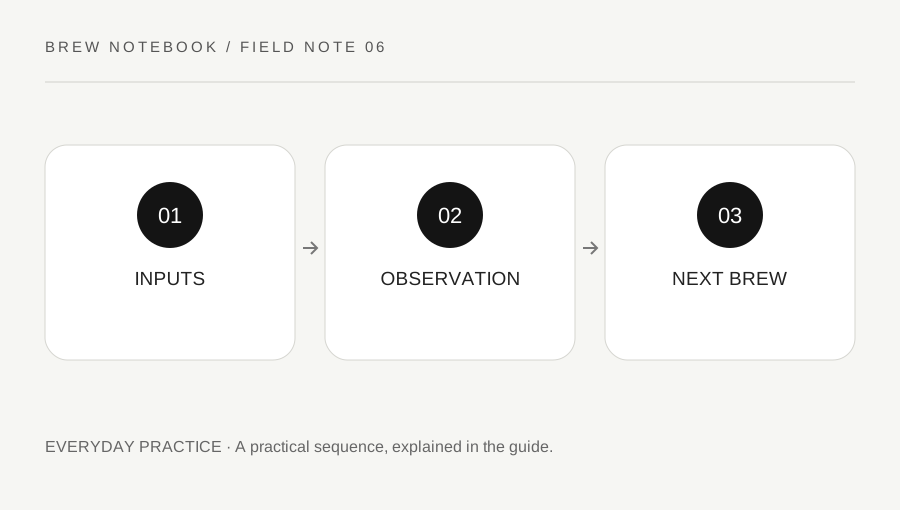
Original explanatory diagram. Numerical examples in this guide illustrate the reasoning; they are not a claim of hands-on testing.
Choose five useful fields
Record coffee name, dry dose, input water, grind setting and the main brewing time or routine. Add the brewer name if you use several. A number like “12” is meaningless without knowing which grinder and setting scale produced it, so include enough context for your own future use.
Keep water input separate from finished beverage weight. In a filter recipe, 300 g input does not promise 300 g in the mug. When switching between filter and espresso notes, label the recipe convention clearly so you do not compare water-input and beverage-output ratios as if they were the same thing.
Write a note that leads to an action
Use a sentence with a direction: “Pleasant but lighter than I prefer; keep grind, try a slightly smaller water input.” Alternatively, “Flow stalled; inspect filter fit before changing dose.” That is more useful than collecting many numbers without explaining the result.
An example entry could read: “Coffee A; press; 25 g / 375 g; grinder 18; manufacturer steeping routine; fuller texture than paper-filter brew; next time decant carefully.” This is an illustrative entry. It does not establish a universal recipe or imply that the grinder setting transfers to another machine.
Keep the system proportionate
Use a notebook or a note on your device. You do not need a public account or cloud upload to remember a recipe. Reuse the calculator for arithmetic, then keep only the results you need. If you share a recipe, include the assumptions and equipment rather than presenting a bare ratio as a guaranteed result.
At the end of a bag, keep one preferred baseline and one lesson. Archive the rest if it becomes distracting. The useful outcome is the ability to make another cup you enjoy, even when your notes are imperfect and your morning is busy.
Review the end of a bag in five minutes
At the end of a bag, look through the notes and select the recipe you would actually repeat. Write it as a complete line with the coffee, brewer, dose, water, grinder and main routine. Add one reason you preferred it. This is your useful takeaway from the bag.
Next, identify one unsuccessful change. Keep the lesson concrete: “coarser setting drained faster but tasted lighter than I wanted” or “changed two variables, comparison unclear.” The second statement is still a useful finding because it improves how you run the next experiment.
When you open a different coffee, treat the old recipe as a starting reference rather than a guaranteed result. Record the new bag and let the taste guide a small adjustment. Keep only enough detail to reproduce the process. If the log becomes so complicated that you stop using it, reduce the fields. A consistent five-field note used regularly is more valuable than an elaborate spreadsheet filled once. The record should make the next cup easier to plan, not become a separate project that you avoid.
A practical checklist
Tick items for your own use. This checklist is saved only in this browser.
Questions that come up
Do I need to measure extraction yield?
No. A scale, a consistent routine and a clear tasting note are enough for a useful home comparison.
Should I record every second of a pour?
Only if it answers a useful question. Dose, water, grind, method and one observation are a manageable baseline.
Can I share a recipe without naming the equipment?
You can, but it is less reproducible. Include the brewer and grinder context and explain that the result is a starting point.
References & scope
Background references checked on 18 October 2026. The examples and practice exercises are original editorial explanations, not copied procedures or professional advice.