Your First Pour-Over: A Repeatable Routine Before the Tweaks
A simple, recorded routine makes it easier to understand a pour-over. Begin with stable quantities and a safe setup, then adjust from the result.
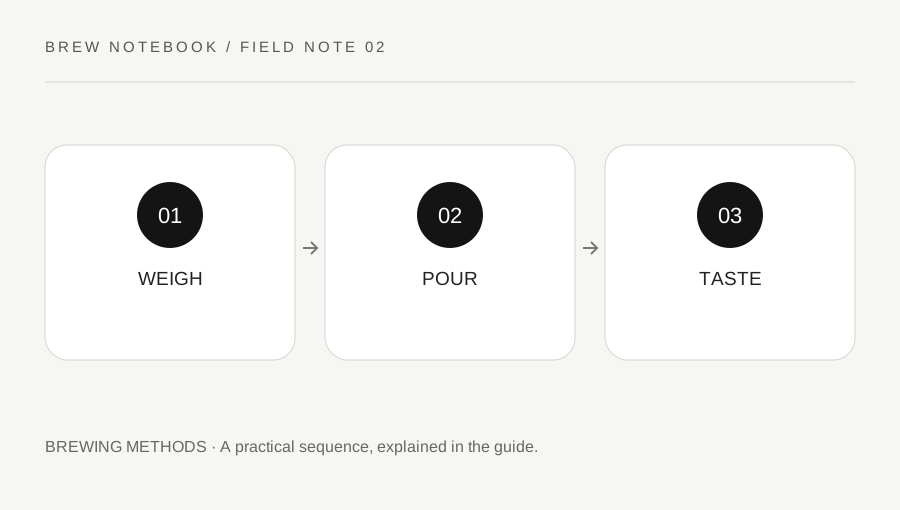
Original explanatory diagram. Numerical examples in this guide illustrate the reasoning; they are not a claim of hands-on testing.
Set up before heating water
Check the brewer instructions, choose a compatible filter and place the brewer securely over a heat-safe mug or carafe. Make sure the vessel has enough capacity for the complete brew. Keep the scale and electrical cables away from spills. A stable setup matters more than an elaborate pouring pattern.
Measure a dose and water target using the ratio calculator. For an illustrative 20 g / 320 g starting recipe, record the grind setting and the filter used. If your brewer or coffee supplier provides a recipe, follow that first rather than combining unrelated instructions from several methods.
Make the first brew observable
Rinse a paper filter if appropriate for the brewer, discard the rinse water and add the ground coffee. Follow the brewer guidance for water temperature and pouring. Wet the bed evenly and use a controlled pour that does not overflow the filter or direct all the water down its sides.
Start a timer so you can record how long that particular brew takes. The time is information, not a pass/fail score independent of brewer, grind and batch size. Let the water drain and remove the brewer carefully. Do not squeeze a paper filter or force hot water through a blocked setup.
Choose the next adjustment deliberately
Taste at a comfortable temperature and write down strength, texture and finish. If drainage was unexpectedly slow, check filter fit, grind and the amount of agitation before changing the ratio. If the cup tastes weak, confirm the measured quantities before assuming you need a more expensive brewer.
Repeat the same method at least once. Then try a small grind adjustment while keeping dose, water and pouring routine stable. Comparing two recorded brews is more useful than trying to remember the taste of a cup from last week. Your preferred result can become the baseline for that bag of coffee.
Use a first-brew record with a clear next question
Before the brew, write the dose, water target, brewer, filter and grinder setting on one line. Leave space for total time and a tasting note. While brewing, note an obvious event such as water rising unusually high or a stream running down the filter wall. You do not need to write a second-by-second diary.
When the cup is ready, compare what happened with the planned routine. If you accidentally poured more water than intended, record the actual amount. That brew can still be enjoyable, but it is not evidence about the planned ratio. If the water target was correct and the cup was pleasant, repeat before optimizing.
For the next brew, choose a question such as “Does a slightly coarser grind reduce the long drawdown?” Keep dose and water fixed so the comparison means something. If a filter is folded incorrectly or the brewer is not stable, correct that setup issue before interpreting taste. A reliable routine gives you a reference against which a small change can be judged. It also makes it easier to return to a good recipe after an experiment you did not enjoy.
A practical checklist
Tick items for your own use. This checklist is saved only in this browser.
Questions that come up
Do I need a special pouring kettle?
A controlled spout can make pouring easier, but begin by following the brewer instructions with equipment you can use safely.
Is an exact brew time a universal target?
No. Brewer shape, filter, dose, grind and method affect drainage. Record time as part of the recipe context.
Should I change grinder, ratio and temperature together?
A combined change can produce a different cup, but it will not show which variable mattered. Use one change for a clearer comparison.
References & scope
Background references checked on 18 October 2026. The examples and practice exercises are original editorial explanations, not copied procedures or professional advice.