Adjust a Coffee Grinder with a One-Step Comparison
Grind markings are references within a particular grinder, not universal recipe numbers. Keep the coffee and brew method steady while testing one sensible adjustment.
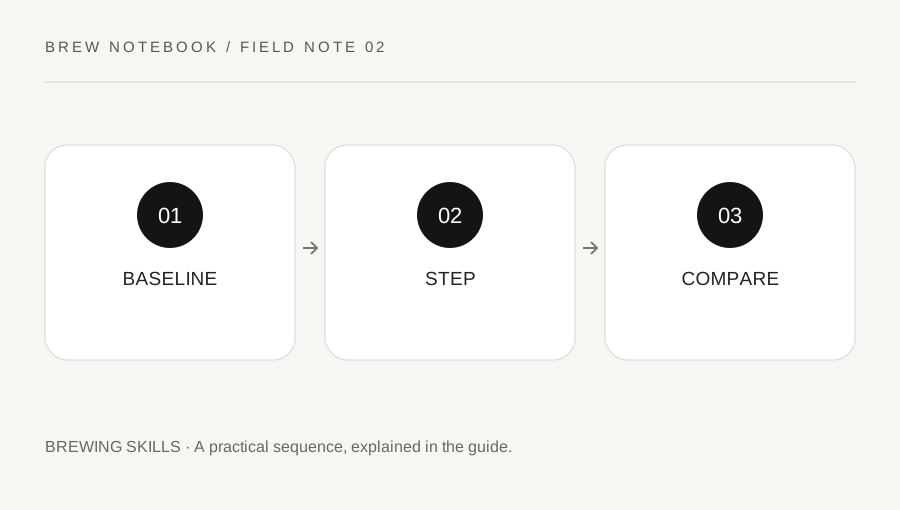
Original explanatory diagram. Examples illustrate a method or decision; they are not claims of personal testing.
Record the grinder you actually use
Write the grinder model and its current setting in your own notation. A number such as ten has no dependable meaning across different grinders, and a photograph of grounds is only a rough reference. Use the manufacturer's adjustment and operating instructions, including whether a change should be made while the grinder is running or stopped.
Keep the coffee, dose, water input and brew method consistent for the first comparison. If the beans change at the same time as the grind, the tasting result cannot be attributed to the grinder adjustment alone. Do not assume a recipe from another setup will transfer exactly, even when both people use a brewer with the same name.
Choose a small test that answers a question
Describe the current result in plain terms and choose the direction suggested by a reliable guide for the method. The NCA explains that grind size interacts with brewing method and contact time. Avoid reducing every sour or bitter impression to a single automatic diagnosis. Water, ratio, technique and the coffee itself can also affect the experience.
Make one modest supported adjustment and brew again using the same planned method. Record the setting, relevant flow or timing observation and taste. A very large jump can show that something changes without helping you find a useful routine. Follow the grinder's limits and do not force an adjustment beyond its intended range.
Work through a method-specific example
Imagine a pour-over recipe repeatedly drains much faster than the user's documented baseline and tastes different from the cup they preferred. They confirm the same coffee, dose, filter and pouring plan, then make one supported grind adjustment. They record the new setting and compare the result after it cools to a similar comfortable tasting temperature.
The example does not prescribe a universal time or prove that the grind caused every change. If the second brew also used a different filter or a rushed pour, the user notes those differences. An honest mixed-variable record is more useful than declaring a precise grinder setting optimal from a comparison that did not actually hold the other conditions steady.
Keep a local reference and revisit it when needed
Once you find a useful starting point, retain it as a reference for that coffee and method. Recheck after changing beans, batch size or equipment. Do not treat a successful setting as a permanent rule for every bag. Small notes about the source coffee and routine help you return to a familiar cup without excessive experimentation.
If the grinder produces abnormal sounds, fails to feed or needs cleaning, follow its instructions rather than forcing a finer setting to compensate. Keep hands and tools out of moving mechanisms and use the approved service route for faults. A good adjustment routine is controlled and repeatable, with tasting and equipment condition considered together.
Record the coffee that actually reaches the brewer
Where practical under the grinder's instructions, distinguish beans weighed before grinding from grounds actually used in the brew. Retained material or spills can make those quantities differ. Do not reach into a powered mechanism to recover a few grounds or shake equipment in an unsupported way. Record a loss as a loss and keep the dose definition consistent between comparisons. A grinder-setting experiment becomes easier to interpret when the actual brewing dose is known, rather than assumed from a number measured before several handling steps.
A practical checklist
Choices are saved in this browser. Reset them here or clear this site’s browser storage.
Questions that come up
Can I copy a setting number from another grinder?
Treat it only as that setup’s reference. Grinder scales and calibration differ, so use your own supported comparison.
Does a sour taste prove the grind is wrong?
No. It is an observation with several possible influences. Compare conditions before choosing one cause.
Should I force a stuck adjustment?
No. Follow the manufacturer’s operating and service instructions.
References & scope
Background references checked on 18 October 2026. Worked examples and diagrams are original teaching material.