Coffee Water Temperature: Use a Supported Starting Point and a Clear Test
A temperature setting is useful when it is part of a repeatable method. Follow equipment instructions, handle hot water carefully and compare one change rather than treating a single number as ideal for every coffee.
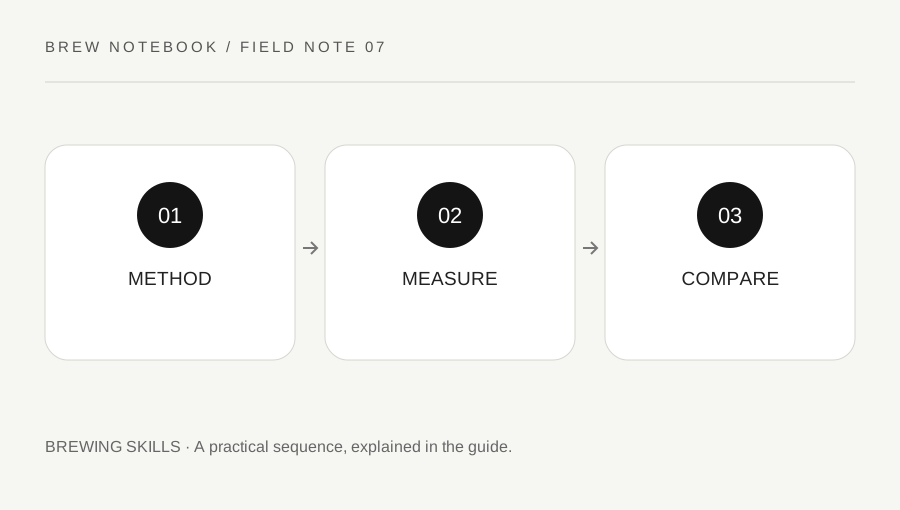
Original explanatory diagram. Examples illustrate a method or decision; they are not claims of personal testing.
Read the method and equipment instructions
Choose a reliable starting method for the actual brewer and coffee. Check the kettle, brewer and vessel instructions for safe use, supported settings and capacity. A temperature recommended for one setup is not automatically the right setting for every roast or method. Avoid taking a number from a short clip without its surrounding recipe.
Set up a stable pouring area and keep handles, cables and hot surfaces managed safely. Do not place a thermometer or accessory in a device unless its instructions permit it. The practical goal is a consistent supported routine, not an improvised measurement arrangement that creates a spill or equipment problem.
Distinguish setpoint from what you observed
A kettle's selected value is a reference for that device. The water and brewer can change temperature as the routine proceeds, so do not describe the setpoint as a complete measurement of every part of the brew. If you use a suitable thermometer through a supported method, record where and when the reading was taken.
Keep other variables steady when comparing. Coffee dose, grind, water input, filter and pouring plan can all change the result. If a different temperature also changes how you pour or the time you wait, note that context. A precise-looking number is not evidence of a precise experiment when the surrounding routine is uncontrolled.
Work through a modest adjustment
Imagine a user has a documented pour-over baseline and wants to compare a small supported temperature change. They keep the same coffee and quantities, follow the equipment instructions and record the setting for each brew. They taste at comparable comfortable drinking temperatures rather than judging one cup while it is much hotter than the other.
They write a plain preference and any observed difference without claiming an exact extraction measurement. If the result is unclear, they can repeat or retain the simpler baseline. This is an illustrative process, not a universal temperature recipe. The appropriate starting point comes from the method, equipment and actual coffee, with tasting used to guide a practical preference.
Keep safety and maintenance outside the experiment
Do not bypass kettle controls, alter heating components or hold hot equipment in an unsupported way to chase a temperature target. If a device behaves abnormally, stop and use its official support route. Keep cleaning and descaling products separate from brewing and follow their instructions rather than improvising.
Retain a concise record of the setting that works for your routine. Revisit it when the coffee or method changes, but avoid assuming that one successful number is a law of good coffee. A useful temperature experiment is small, safe and understandable, with the final cup assessed as a preference under recorded conditions rather than a promise of the best possible result.
Keep vessel preparation consistent
If the supported recipe includes warming a brewer or vessel, follow that step consistently and account for any water discarded before brewing. Do not heat equipment in a way its material or instructions do not support. A cold vessel in one attempt and a prepared vessel in another create a different comparison from a kettle-setting change alone. Record the preparation in the baseline, then keep it brief in later logs. The aim is repeatable context rather than a complicated ritual with no clear question attached.
A practical checklist
Choices are saved in this browser. Reset them here or clear this site’s browser storage.
Questions that come up
Is one temperature ideal for every coffee?
No. Use a suitable starting method and a controlled preference comparison rather than a universal claim.
Does a kettle setting measure the whole brew?
No. It is a device setpoint; record any actual measurement with its location and timing.
Should I modify equipment to reach a target?
No. Use supported controls and the manufacturer’s safety and service instructions.
References & scope
Background references checked on 18 October 2026. Worked examples and diagrams are original teaching material.