Compare Coffee Water Sources Without Changing the Whole Brew
Water is part of the recipe, but a comparison needs a safe source and a consistent method. Keep the question practical and avoid turning one tasting preference into a universal water formula.
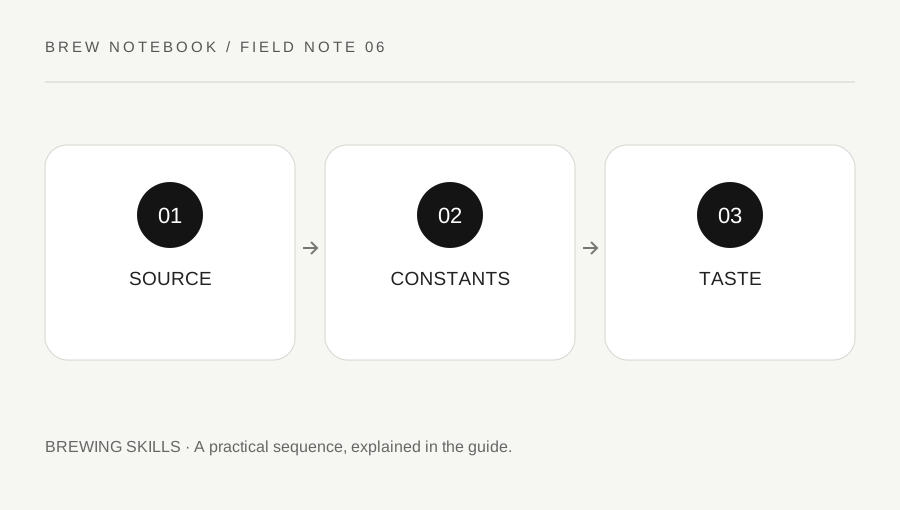
Original explanatory diagram. Examples illustrate a method or decision; they are not claims of personal testing.
Choose a safe appropriate comparison
Use water suitable for drinking and follow the brewer or machine manufacturer's requirements. A source suitable for a kettle may still interact with a machine's maintenance needs, so check the relevant instructions. Do not add chemicals or mineral concentrates from an unverified recipe to an appliance or drinking water.
Write down the actual sources you intend to compare and what question matters: flavor preference, consistency or an equipment requirement. A bottle label or filter brand is not a complete explanation of every property. If a local water-quality issue exists, use the relevant authority's current information rather than a coffee article as a safety assessment.
Hold the rest of the routine steady
Use the same coffee, dose, grind reference, input quantity and supported method. Keep the vessels and tasting conditions comparable. If you change coffee or brew temperature simultaneously, the result becomes harder to attribute to the water source. Record any unavoidable difference instead of calling the comparison controlled when it was not.
Label cups privately so you can keep track without relying on memory. If tasting with someone else, make it a modest preference exercise rather than a claim of scientific proof. A small home comparison can tell you which cup you preferred under those conditions. It cannot establish what every coffee drinker or every brewing machine should use.
Work through a two-source example
Imagine a user compares their usual suitable tap water with a suitable filtered source under the filter and brewer instructions. They make two manageable brews with the same input recipe and note which cup they prefer after similar cooling. They record the actual filter condition and any other relevant difference.
If the preference is unclear, they can repeat on another occasion or keep the simpler supported routine. They do not invent a precise mineral explanation from taste alone. If the machine manufacturer excludes a particular water type, the comparison does not override that requirement. This example focuses on a practical decision, not a universal chemistry prescription or a health claim.
Keep maintenance and flavor as separate decisions
Follow appliance instructions for filter replacement, cleaning and descaling. A cup that tastes pleasant does not prove the machine needs no maintenance, and a maintenance product is not a flavor additive. Keep the product labels and manufacturer process distinct from the brew recipe. Do not mix cleaning materials or improvise a stronger treatment.
Record the source that becomes your regular baseline so later flavor comparisons remain interpretable. Revisit it when the source or filter changes, but avoid endless changes without a useful question. The best outcome for an ordinary home routine is a safe supported water choice, a maintained appliance and a cup you prefer, with the limits of a small tasting comparison kept clear.
Record a filter replacement as a real change
A recently replaced water filter and an overdue one should not be treated as an identical source condition. Follow the filter's preparation and replacement instructions and keep the date or status in the private brew note when relevant. Do not infer drinking-water safety from a coffee taste test. If the manufacturer requires a flush or another setup step, complete it before the comparison. This small source record helps distinguish a water-related change from a simultaneous new coffee, grinder adjustment or maintenance event.
A practical checklist
Choices are saved in this browser. Reset them here or clear this site’s browser storage.
Questions that come up
Can taste alone reveal an exact mineral profile?
No. A home preference comparison does not measure water chemistry or establish a universal recipe.
Can I ignore the machine’s water instructions if the cup tastes good?
No. Follow the manufacturer’s requirements and maintenance guidance.
Should I add an online mineral mixture immediately?
Do not use unverified additives. Check the actual product, water and equipment requirements first.
References & scope
Background references checked on 18 October 2026. Worked examples and diagrams are original teaching material.