Iced Coffee Dilution: Account for the Ice in the Plan
Hot-brewed coffee served over ice needs a deliberate water plan. Keep brewing water, ice and finished drink measurements separate instead of adding ice and expecting the original strength to remain unchanged.
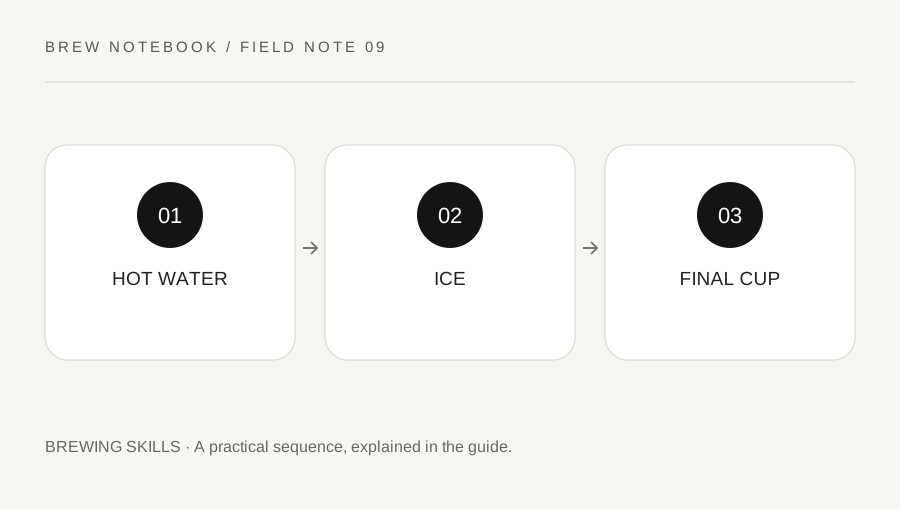
Original explanatory diagram. Examples illustrate a method or decision; they are not claims of personal testing.
Distinguish the method you are making
The NCA distinguishes cold brew, made with cooler water over its brewing process, from coffee brewed hot and then cooled for serving. Decide which method you intend before choosing quantities. A recipe for one should not be treated as the same process simply because both drinks are served cold.
Use suitable clean equipment, drinking water and ice, and follow the brewer's supported instructions. Check that the receiving vessel is appropriate for the temperature change and planned capacity. Do not pour hot liquid into a container that is not intended for it. Prepare a manageable amount for the immediate task rather than improvising storage advice from a ratio calculation.
Write the water and ice inputs separately
A hot-brew-over-ice plan can allocate some of the total water input to brewing and some to ice, but the chosen brewing portion must still suit a reliable method. Arithmetic alone does not establish adequate contact or extraction. Use a suitable recipe and record its components rather than removing half the brewing water from any hot recipe at random.
Keep ice intended to melt during preparation distinct from extra serving ice. If the drink continues to sit, the latter can change dilution too. The weight in the final glass is not necessarily identical to the planned total input because grounds and equipment retain liquid. Use clear labels in the log rather than treating every water-related number as interchangeable.
Work through an input-label example
Imagine a supported recipe's illustrative plan includes 200 grams of hot brewing water and 120 grams of preparation ice. The total planned water input is 320 grams if that ice melts. This is an arithmetic demonstration, not a complete brewing recipe or a promise of a 320-gram beverage output.
The user records any additional serving ice separately and tastes the drink at the intended serving point. If the cup seems too diluted, they return to the suitable recipe and make one deliberate change rather than changing coffee, grind and every water component at once. They also check whether the comparison happened immediately or after substantially more ice had melted.
Keep flavor and food handling distinct
A ratio guide does not provide a storage or food-safety assessment. Follow appropriate handling instructions for the ingredients, equipment and any milk or other additions you use. Do not assume that a pleasant taste establishes a safe storage period. This article focuses on a drink prepared through a suitable method and reviewed for immediate serving preference.
Keep the accepted iced routine separate from the hot-cup baseline. Record coffee dose, hot-water input, preparation ice and serving additions. A useful plan makes the dilution understandable and repeatable, while leaving safety, vessel compatibility and the actual brew method under their relevant instructions. No single ice split is presented as ideal for every coffee.
Write the serving point into the log
A note such as tasted immediately after preparation is more informative than a bare statement that the iced drink was weak. If you compare after a longer wait, record that too because additional melting changes the context. Use the same suitable glass and planned additions for a practical repeat. Do not estimate a precise remaining ice mass by appearance and present it as measured. The useful habit is clear timing and labels, with the actual serving experience guiding a modest next adjustment.
A practical checklist
Choices are saved in this browser. Reset them here or clear this site’s browser storage.
Questions that come up
Is iced coffee the same process as cold brew?
No. The terms describe different brewing approaches, even when both drinks are served cold.
Does total input equal the liquid in the glass?
Not necessarily. Grounds and equipment retain some liquid, and serving ice can change the final amount over time.
Can a ratio calculation tell me storage life?
No. Use appropriate food-handling guidance for the actual ingredients and process.
References & scope
Background references checked on 18 October 2026. Worked examples and diagrams are original teaching material.