A Moka Pot Routine Starts with the Exact Model Instructions
A moka pot is a heated pressure-based brewer, so the manufacturer’s setup and safety instructions come first. Use them to build a modest repeatable routine rather than improvising modifications.
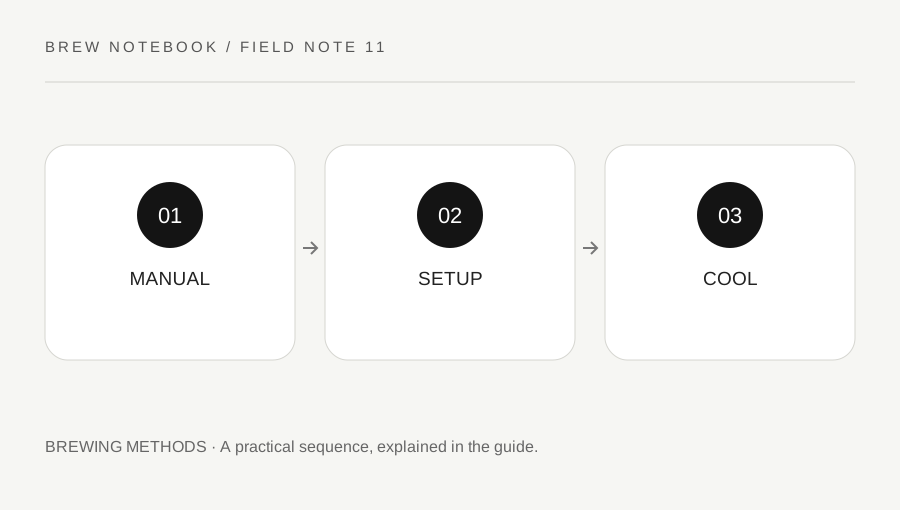
Original explanatory diagram. Examples illustrate a method or decision; they are not claims of personal testing.
Identify the pot and supported heat source
Read the instructions for the exact model, including compatible heat sources, capacity and safe handling. Do not assume every moka-style pot has the same materials or can be used on every hob. Inspect the parts the manual tells you to check and stop if a seal, valve or other component appears damaged or unsuitable.
Use the intended assembly and never alter or obstruct a safety feature. A general coffee article does not replace the manual's warnings. Keep the working area stable and follow heat-source instructions, with handles positioned appropriately and the brewer attended. Do not open a hot or pressurized pot to inspect the coffee mid-process.
Keep the fill and coffee preparation within guidance
Bialetti's Moka Express instructions describe keeping water below the safety valve and loosely filling the funnel rather than pressing the coffee down. Use the current instructions for your own model if they differ in detail. Do not borrow espresso-machine preparation habits such as firm tamping merely because the drink is concentrated.
Record the supported capacity, coffee and grind reference without changing the vessel's required fill arrangement to force a different serving size. If you want less coffee, check the manufacturer's supported options rather than improvising an underfilled pressure setup. Keep the assembly clean and correctly seated according to the manual before applying heat.
Use a first-brew record
Imagine a user follows the model's routine and writes down the coffee, supported setup and ordinary heat guidance used. They observe the process without leaning over the outlet or attempting to open the brewer. After serving safely, they record the flavor at a comfortable temperature and any unusual behavior.
If the process is abnormal, they stop and consult official support rather than increasing heat or modifying the valve to force flow. The example is a planning record, not a complete substitute recipe. A repeatable coffee note is useful only when the equipment is being used as intended and the relevant safety checks remain in control.
Cool and clean through the supported process
Follow the manual for cooling, disassembly, cleaning and drying. Do not apply a universal detergent or dishwasher instruction to every material. Keep the parts and any replaceable seals identified so a later replacement follows the correct specification. Do not use an improvised repair on a component involved in pressure or sealing.
Keep the accepted routine and the manufacturer's reference together. If flavor changes, inspect the actual coffee and supported maintenance before making several recipe changes. A useful moka-pot habit is a safe model-specific process with clear observations, not a promise that one trick makes every pot produce espresso or that a generic online method overrides its intended use.
Keep replacement parts model-specific
If a seal or another user-replaceable component needs attention, use the specification and procedure for the exact pot. A part that appears similar is not necessarily suitable for its material, size or intended operation. Do not cut a substitute or alter a component to fit. Retain the manual reference and describe the model accurately when asking support. A coffee recipe should begin only after the equipment is in an appropriate supported condition, not be used to work around a leaking or otherwise abnormal assembly.
A practical checklist
Choices are saved in this browser. Reset them here or clear this site’s browser storage.
Questions that come up
Is a moka pot the same as an espresso machine?
Treat it as its own brewing method with its own instructions rather than copying espresso-machine preparation steps.
Can I adjust the safety valve to change the brew?
No. Do not modify or obstruct safety components. Use the manufacturer’s service route for problems.
Can every pot go in a dishwasher?
Check the exact model and material instructions. Do not apply one cleaning rule to every moka-style brewer.
References & scope
Background references checked on 18 October 2026. Worked examples and diagrams are original teaching material.