Scale Up a Pour-Over Batch Without Assuming the Time Scales Equally
A ratio can scale arithmetically while the physical brew changes. Check brewer capacity, filter fit and the larger coffee bed before expecting an identical cup from a doubled recipe.
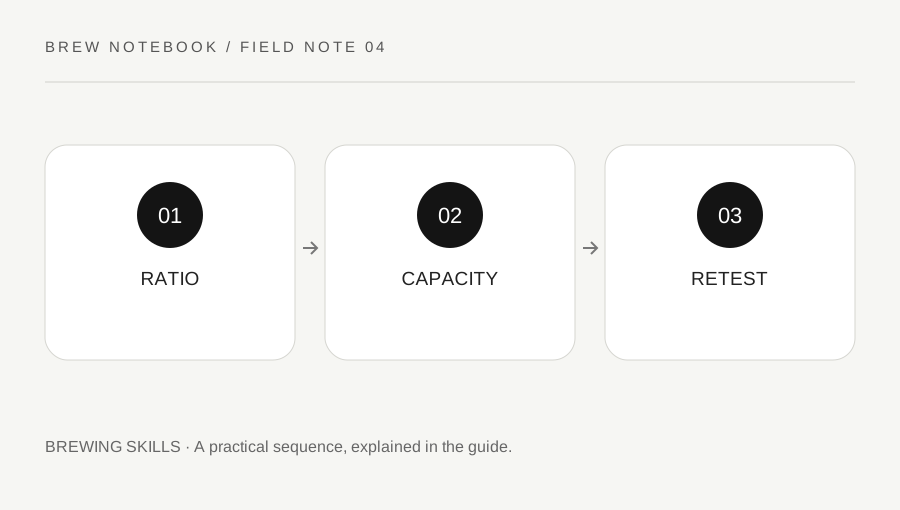
Original explanatory diagram. Examples illustrate a method or decision; they are not claims of personal testing.
Check the equipment before calculating
Read the brewer's supported batch size and the vessel's practical capacity. Allow for the actual water level, grounds and safe handling rather than filling to the visible rim. A larger recipe may need a different supported brewer or a separate batch. Do not overload a small setup because the ratio calculator can produce a larger number.
Check the scale capacity and stable placement too. A filled vessel can weigh more than the coffee and water values alone suggest. Keep the filter compatible and the receiving container appropriate for hot liquid. A safe manageable arrangement is the starting condition; arithmetic cannot make an undersized brewer suitable.
Scale the inputs and label the assumption
If a documented starting recipe uses 18 grams of coffee and 288 grams of water, doubling the same input ratio gives 36 grams and 576 grams. These are illustrative numbers rather than a universal prescription. Write that you are preserving input ratio, not promising identical flow time, extraction or beverage output.
A larger bed and pouring pattern can behave differently. Keep the first larger attempt simple and record the plan. Avoid simultaneously changing the coffee, filter, water and grind unless the equipment instructions require a specific adjustment. If several things must change, note them so the result is understood as a new baseline rather than a controlled one-variable comparison.
Use a first-larger-batch review
Imagine a user moves from one cup to a supported two-cup batch. They calculate the input quantities, verify capacity and follow a reasonable method for that brewer. They record the actual additions and any relevant timing, then taste after the drink reaches a comparable comfortable temperature. They do not reject it solely because the total time is not exactly double.
If the result is not preferred, they choose one next question, such as the grind or the pouring plan, using reliable method guidance. They keep the accepted small-batch recipe separate so it remains available. The exercise demonstrates a repeatable process, not a guarantee that one adjustment will reproduce the same sensory result at every batch size.
Create distinct baselines for useful sizes
Keep a separate record for the batch sizes you regularly make. Include the brewer, filter, dose, water input, grind reference and a concise tasting note. This can be more practical than recalculating every cup from a single recipe while ignoring the equipment change. Use the calculator for quantities and the log for observed behavior.
If the larger batch strains the setup or is awkward to pour safely, choose a supported alternative rather than chasing a recipe improvement. A useful home routine serves the number of people you need with manageable equipment and a cup you enjoy. The result should be repeatable enough for ordinary use, with uncertainty recorded rather than hidden behind a precise ratio.
Divide the drink deliberately
When serving several cups, decide how you will divide the completed brew and use a suitable vessel and handling method. The first and last liquid collected during a process are not a controlled taste comparison by themselves. Follow an appropriate supported routine for serving, and keep the carafe stable. If one cup receives an extra addition, label that difference. A shared batch should be compared as the actual finished drink rather than using uneven pours to decide that the larger recipe is inconsistent.
A practical checklist
Choices are saved in this browser. Reset them here or clear this site’s browser storage.
Questions that come up
Does doubling coffee and water guarantee the same taste?
No. It preserves the input ratio while the physical brew can change. Review the supported larger method and actual result.
Should the total time be exactly twice as long?
Do not assume that. Observe the method and use timing as context rather than a universal scaling rule.
What if the brewer is too small?
Use a supported larger setup or separate batches rather than overfilling.
References & scope
Background references checked on 18 October 2026. Worked examples and diagrams are original teaching material.